When you’re 5 years old and you’ve just been bought your first pair of football boots by your equally eager, if not more eager, parents and you’re brought down to your local clubs grassroots set up , everybody’s dream is the same. Everyone thinks they’re a forward, that the role of the main man was designed for them. The coaches divide out the positions unbeknownst to how many children they’ve just disappointed by playing them out of their desired position. You’d wonder if someone at Fettercairn Boys in Tallaght thought Robbie Keane had the makings of a great left back , or if Lifford Celtic in Donegal had a great young target man named Shay Given leading the line for them at one point. Wherever these Irish greats were first lined up by their grassroot gaffers, it was only a mere stepping stone to finding the place they truly belonged .
Since the inception of the Premier League in 1992, Ireland has had 174 representatives, a number not too be sniffed at due to a highly competitive league and the undying loyalty of tremendous athletes playing our own national games across Ireland.
Looking at the skills needed in the games of Gaelic Football and Hurling , handling, hand-eye coordination, high fielding and the courage to put hands where others wouldnt put their foot, you would think that the position of goalkeeper had Ireland written all over it.
I too believed in this clear as day correlation but as it turns out goalkeepers only account for 10% of Irish who have played their trade in England’s top flight . Perhaps it is the level of success that small group enjoyed in their individual careers that led me to believe that number would be greater. The aforementioned Shay Given is Ireland’s highest appearance maker in the league with a staggering 451 games across 5 different clubs. Although his trophy haul is smaller then he would like , Given has been honoured for his efforts by being named twice in the leagues team of the season.
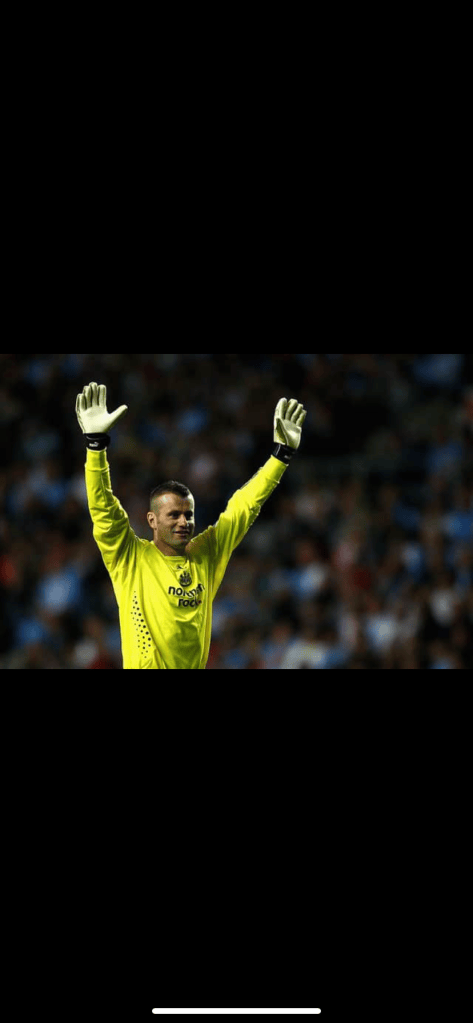
Looking at other names who have set up shop between the sticks such as Dean Kiely , Darren Randolph and Mark Travers , it seems Ireland has donated a large number of deputies to the number one keeper throughout the leagues history. One man about to step out of the shadows of that role is Caoimhin Kelleher.
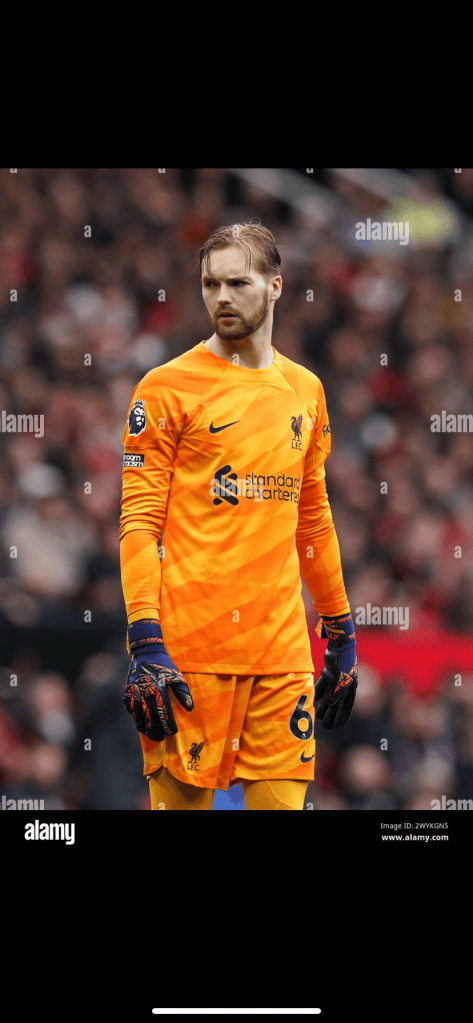
Having just picked up his second winners medal at Liverpool , albeit his first was an honour bestowed by his club as he didn’t play a league game in the 19/20 season, Kelleher has made the move to Brentford. His second league medal, to go along with numerous cup wins he was heavily involved in claiming and a Champions League winners medal in 2019 as third choice, was duly deserved as he was a trustworthy stand in for Alisson Becker when called upon. Leaving many Liverpool fans disappointed to see him go, it was time for him to become an ever present number one at an established Premier League side , although early signs point towards it being a very long season.
If the small number of goalkeepers came as a surprise , the number of centre forwards should prove less shocking despite one or two notable Irish stalwarts. Only 15% of Irishmen have been trusted with leading the lines of a Premier League side , and not since Robbie Keane can any of them be described as prolific. Time is on Evan Fergusons side to fill Keanes boots but that will be an argument for another day as Ferguson embarks on a loan spell at Italian sleeping giants Roma.
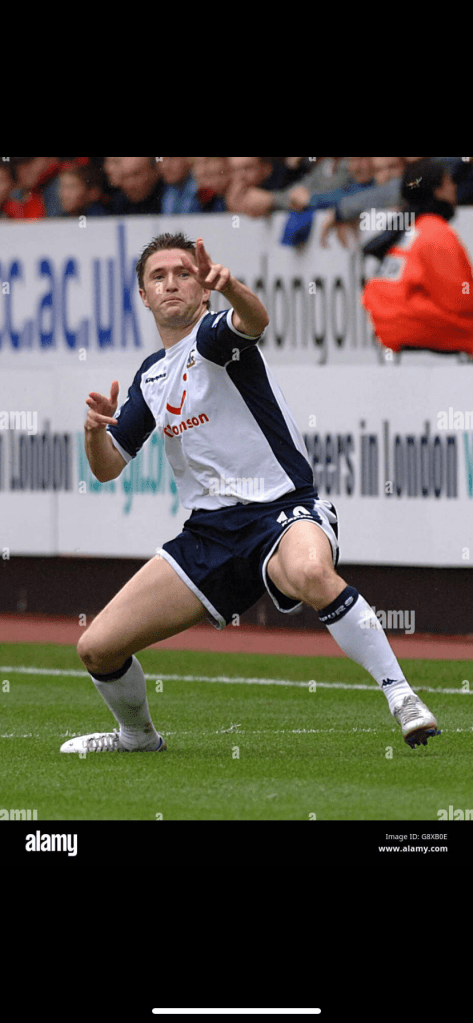
To give credit where it is due, we have had hardworking, honest, heart on their sleeve battlers such as Shane Long, Jon Walters and Kevin Doyle who have had brilliant moments with club and country but nobody can come close to Keanes output. Sitting pretty in 18th of the competitions all time scorers with 126, Keane was a fan favourite at most of the clubs he represented and perhaps a “what could have been” at one or two others. Irelands record appearance maker known for his trademark cartwheel celebration is best remembered for his spells at Spurs , with 16 goals in the 2006/07 season his best on record.
It would be unfair to not give another Irish icon his fair due. While his goal tally is not as hefty as his brief international partner Keane , Niall Quinn held his own and for a season at least was part of the worlds deadliest duo. Quinn and Kevin Phillips led Sunderland to a remarkable 7th place through a combined 52 goals and assists in the 1999/2000 season with Phillips scoring 30 league goals to win an incredibly unlikely Golden Boot and if it was possible , an even unlikelier European Golden Shoe. Their tandem of a classic little and large tactic put a Sunderland striker at the peak of the footballing elite, perhaps never to be achieved again.
We are beginning to reach safety in numbers for the Irish. And who better to led us to said safety than the midfield generals. Accounting for 35% of the islands representation, the engine room of the football pitch has seen a number of our exported players pit themselves against the best players the league has had to offer, with one becoming one of the very best himself.
Some of our midfield players were able to carve out respectable, battle hardened careers. Matt Holland captained Ipswich to an outstanding 5th place in 2001 season straight from promotion but unfortunately captained them to a relegation the following year. Glenn Whelan was often heavily criticised in an Irish jersey but was an ever present for a breath of fresh air Stoke side that unapologetically ruffled feathers in a rollercoaster 10 year stay in the top flight. Darren Gibson has his place in an elite club as a one time Premier League winner with Manchester United, and I am certainly not in the position to take that away from him.
In the modern day wide players are generally classed as forwards but our most memorable wide player of the Premier League era was a hardworking craftsmen who got back down the pitch as fast as he went up it .
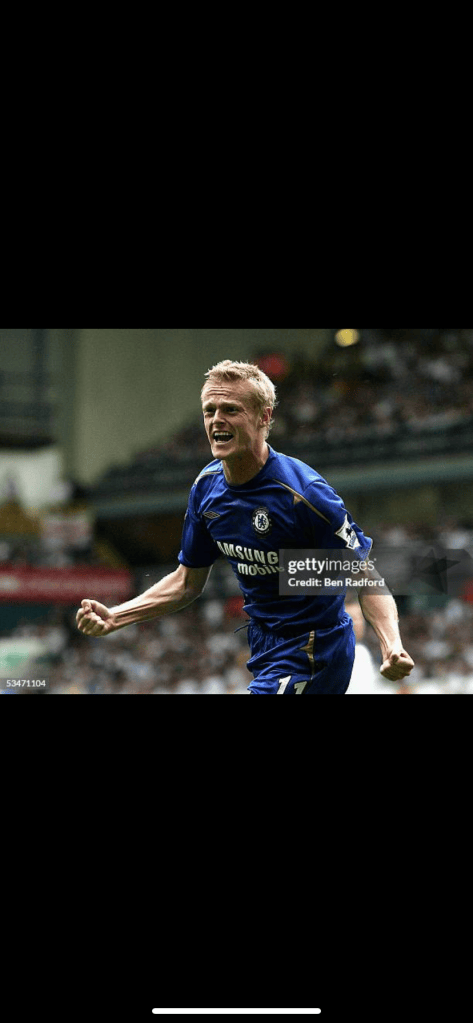
Damien Duff left England with 392 games under his belt and 104 goal contributions. It would probably be sneered at in the modern game but Duff was adored by the teams he lined out for. With incredibly high defensive numbers, he helped out his teammates furiously backtracking, intercepting, clearing and generally making a nuisance of himself. This work rate didn’t go unnoticed, and who better to notice you newly owned Chelsea. Claudio Ranieri brought Duff to Chelsea in 2003 to add to the ever growing collection of steely, resilient talent at his disposal. Duff was then part of a Chelsea side to win two league titles under José Mourinho.
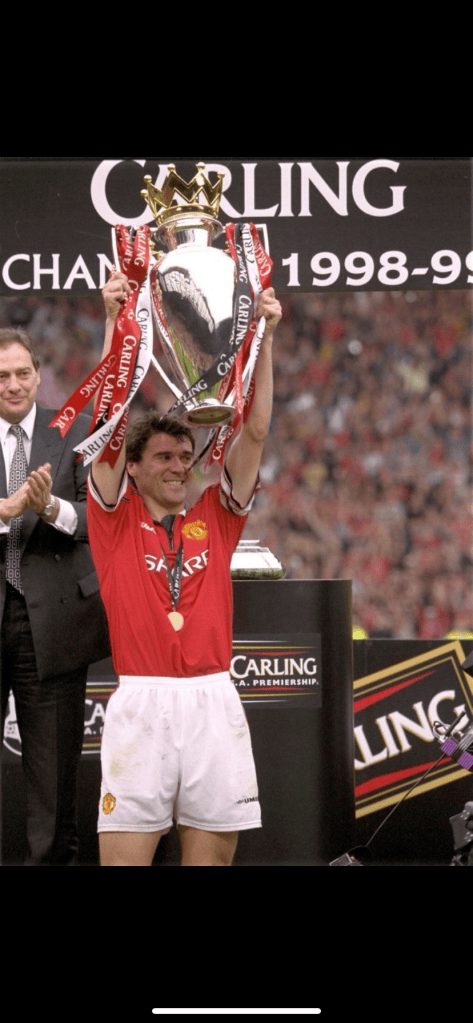
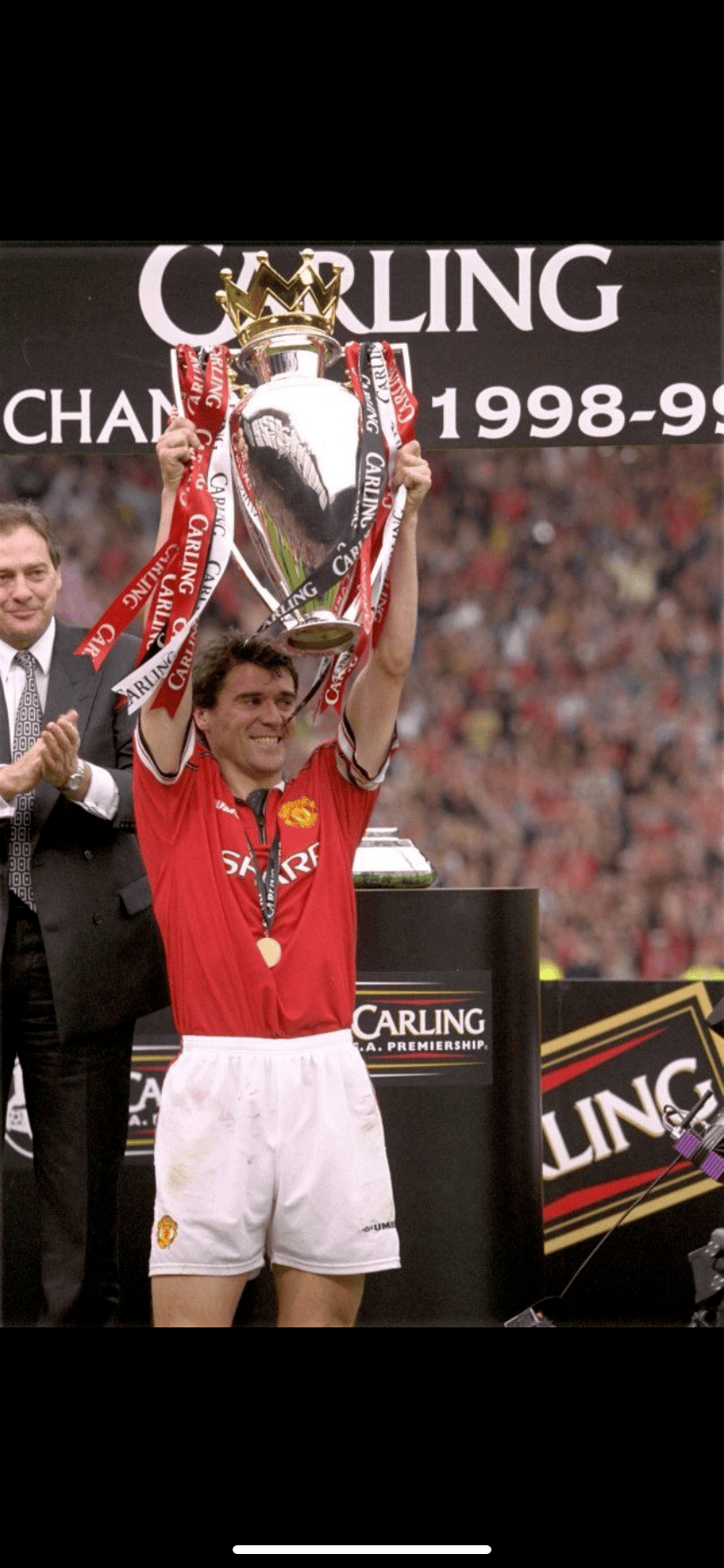
Speaking of league titles under legendary managers, there is a man hailing from our little island that needs no introduction as anyone with the faintest idea of football knows his name, for his better moments or his controversial story along the way. A true icon of the Premier League and the central figure of Irish football for a decade, the impact of Roy Keane will be everlasting.
A commanding presence in United folklore , Keane was central to their dominance of the 90s into the early 2000s. Starting off in 1993 as a young box to box midfielder with an eye for goal and an appetite for a tackle , Keanes talent, bravery and leadership brought him the captains armband in 1997. Never one to shirk responsibility, Keane led by example on numerous occasions, none more famous than an away semi final tie comeback against Juventus in 1999 as United marched to a Champions League final win and an historic treble winning season.
In a twelve year spell at the club , Keane gathered an eye watering trophy collection , 18 major honours to be exact , 7 of which were Premier League titles, leaving him tied as Irelands most prolific league winner. He is not only an Irish footballing hero, as for many, many fans of the English game he is the face of an era filled with bitter rivalries , true grit and playing on the edge passion.
There will be no prizes for guessing which position on the field has been most frequently called home for the Irish. And when you think of the characteristics of the Irish it does seem to make perfect sense. We are known to be tough , resilient, disciplined, harbouring a stubborn refusal to accept defeat , and to battle until the very end. Traits needed to be a defender of the highest level. Accounting for close to half of our representation at 40%, we have endured a number of our defenders fight against the harsh realities of relegation but have also enjoyed a handful reach the very pinnacle of the sport on numerous occasions.
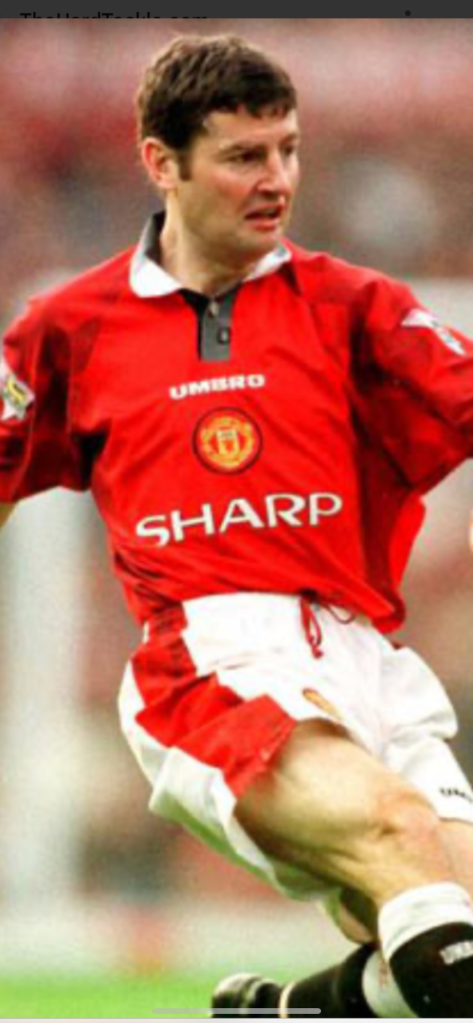
If we argued hard enough there would be two Cork men in the Premier League all time 11. Keane in the centre of the park and Denis Irwin at left back. Like Keane, Irwin won 7 league titles and the treble during his 12 year stay at the club, featuring 328 times in the Premier League. Dependable at both left and right back and always available to play, it was his proficiency and reliability as a dead ball specialist that made Irwin a stand out defender throughout his United career. Irwin left United in 2002 passing on the mantle of Irish utility defender to a neighbouring Waterford man.
John O’Shea made an outstanding 445 appearances in the league, 256 came as a United player with a habit of turning up in various positions in the pitch including seeing out a 4-0 win in goal after an injury to Edwin van der Sar. O’Shea had a knack for scoring important goals against hated rivals , stealing a 1-0 win at Anfield and putting the finishing touches on a 4-2 win at Highbury. He left Manchester United for Sunderland in 2011 with 5 league winners medals and a Champions League medal, a feat that would draw the envy of many an opponent.
Steve Finnan’s career can be used an example to many aspiring footballers. Beginning in the Conference League with Welling United in 1993, Finnan played in every professional league in England as he earned his success the hard way . A move to the second division to Fulham in 1998 saw him become an ever present for the side as they climbed the tiers to finally reach the Premier Legaue in 2001. His doggedness brought him a move to Liverpool in 2003 and although the title eluded him , he was part of the Champions Leagues greatest final as Liverpool came back from a 3-0 deficit to beat AC Milan on penalties. The following year he added the FA cup to his collection. Finnan remains a great poster boy for what can be achieved by going the long route in a footballing career.
If longevity was awarded with winners medals, Irelands total would be enormous. Richard Dunne finished his career with 431 league appearances. Leeds United’s full back positions were filled up by Irishmen for a decade as Gary Kelly and Ian Harte made 325 and 213 appearances respectively. Jeff Kenna has 290 games in the competition for numerous clubs in the full back position , although he is trumped by Stephen Carrs 377 turnouts. There is one man hot on the heels of Carrs tally, who has a nation and half of Merseyside urging him on.
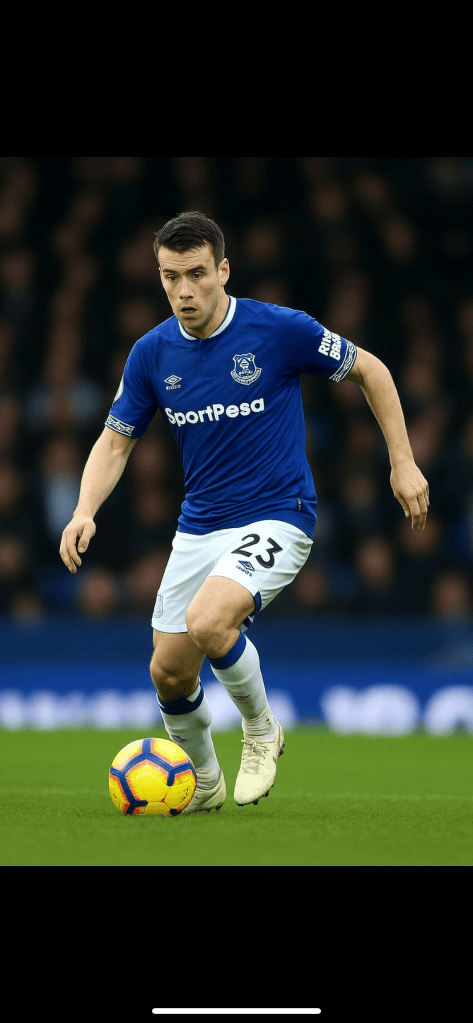
Having just signed a one year extension with Everton , Seamus Coleman begins the season on 369 games, the most by an Irishman at one club. Signed from Sligo Rovers in 2009 for what one might consider pennies, he quickly established himself as Evertons starting right back, a fan and manager favourite in his time at the club accumulating in being named captain in 2019. His role as captain has been even more demanding off the pitch as on it as Everton have struggled financially and boardroom control put in the hands of the less caring. Coleman has steered Everton to safety on numerous occasions, and if this is to be his final year he will walk away a true legend of the club.
Having just commenced the opening weekend of the 2025/26 league season, Ireland accounted for 6 players in 20 match day squads. Coleman an unused substitute alongside Mark Travers for Everton with Cork man Jake O’Brien starting at right back. Brentford had Kelleher debuting in goal with newly appointed club captain Nathan Collins at centre half ahead of him, while Burnley returned to the top flight captained by the dutiful Josh Cullen. There is solace that 3 out of the 17 teams in the league are captained by Irishmen although I suspect it will be difficult seasons for all 3 leaders.
And it also appears that the stats don’t lie. History shows that you are most likely to see an Irish man lining up in the back line, and the present backs up that assumption. 3 out of our 6 Irishmen are defenders, followed by 2 goalkeepers and a tenacious midfield player in Cullen, but alas no forwards.
Maybe we are not born seeking the bright lights and affirmation of a centre forward, perhaps we belong and are better suited to the thankless tasks that every team needs seeing to in order to succeed. Unfortunately we’ve never had an Irish centre forward stand on the podium on the leagues final day with a winners medal adorned his neck. There’s a first time for everything of course.
But we have had numerous icons and genuine club and league legends lift multiple trophies that brought great pride and joy to our small footballing nation . Whether you are the star man or the last line of defence, or a valued squad player who brings relief and confidence to the paying crowd when you are brought on to finish out the game , once that winners medal is wrapped around your bowed neck , it all means the exact same.
 Football : Foreign&Familiar